
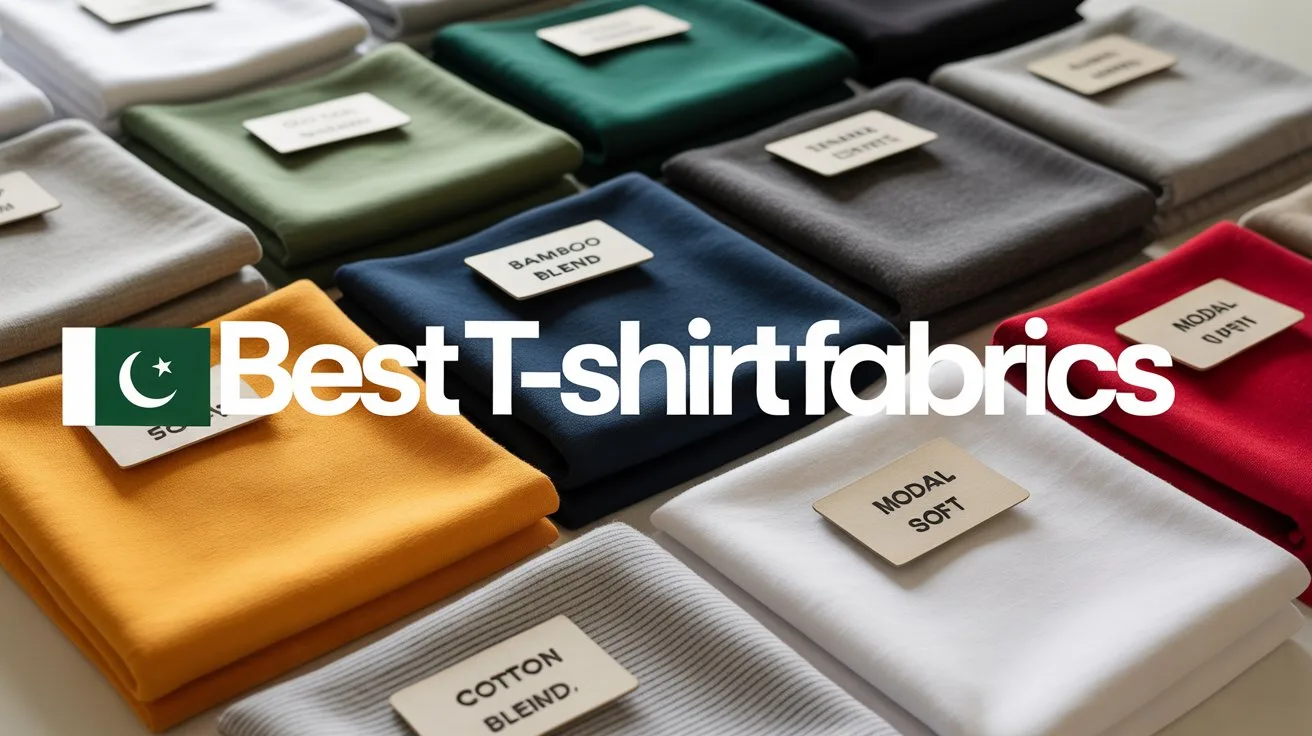
What is the Best Fabric for T-Shirts in Pakistan? A Complete Guide
The most important decision you make when buying a t-shirt in Pakistan is not the design, the colour, or the price — it is the fabric. The wrong fabric makes a t-shirt unwearable by June. The right one stays comfortable, holds its shape, and keeps its colour for years. This guide answers every question Pakistani men actually ask about t-shirt fabric — clearly, practically, and without the fluff.
🧵 What is the Best Fabric for T-Shirts in Pakistan?
100% cotton is the best fabric for t-shirts in Pakistan. Cotton breathes well in extreme heat, absorbs moisture, feels soft against the skin, and holds print quality far longer than synthetic alternatives. For Pakistan’s climate specifically — where summer temperatures regularly exceed 40°C — cotton is not just a preference, it is a practical necessity. A fabric weight of 180–200 GSM is the ideal range for everyday t-shirts in Pakistan.
Pakistan’s climate makes the fabric question more consequential than it would be in most other countries. According to research from Cotton Incorporated — the global authority on cotton science, cotton’s natural fibre structure enables significantly greater breathability and moisture management than synthetic alternatives, making it the correct fabric choice for hot-climate everyday wear.
In a temperate European climate, the difference between a cotton and a polyester t-shirt is mostly a matter of preference. In Lahore or Karachi in June, that difference is the gap between an outfit you can wear comfortably for eight hours and one that makes you miserable by noon.
The best fabric for t-shirts in Pakistan needs to satisfy four specific requirements that the country’s climate and conditions demand. It needs to breathe in 40°C direct heat. It needs to absorb sweat rather than trap it against the skin. It needs to hold its colour and print quality through repeated hot-water washing cycles — because most Pakistani households wash on warm or hot. And it needs to feel comfortable against skin in both dry heat and high humidity, since Pakistan experiences both depending on season and city.
Only one fabric meets all four of those requirements consistently: cotton. Everything else involves a compromise on at least one of them — and in Pakistani conditions, those compromises are felt immediately and every single day.
📊 Every T-Shirt Fabric Compared for Pakistan’s Climate
There are several fabrics used in t-shirts available online in Pakistan right now. Here is an honest comparison of every major option across the factors that actually matter for Pakistani conditions:
| Fabric | Breathability | Heat Performance | Print Durability | Wash Durability | Pakistan Verdict |
|---|---|---|---|---|---|
| 100% Cotton | Excellent | Excellent — reflects heat, absorbs sweat | Excellent — holds print through 100+ washes | Very Good | Best Choice |
| Cotton-Poly Blend (50/50) | Good | Good — slightly warmer than pure cotton | Good — more resistant to shrinking | Excellent — very durable | Acceptable |
| 100% Polyester | Poor | Poor — traps heat and moisture | Good — sublimation prints are vibrant | Excellent | Avoid |
| Viscose / Rayon | Good | Good — lightweight and cooling | Poor — degrades quickly with washing | Poor — loses shape and colour fast | Avoid |
| Linen-Cotton Blend | Excellent | Excellent — very cool in heat | Moderate — plain colours only | Good | Good for plain tees |
| Pique Cotton (Polo fabric) | Excellent | Excellent — open weave allows airflow | N/A — used for polos not graphic tees | Excellent | Best for Polos |
The pattern in the table above is clear: cotton in its various forms dominates every important category for Pakistani conditions. Polyester’s only advantage — print vibrancy for sublimation printing — is not relevant to the kind of screen-printed or DTG graphic t-shirts most Pakistani men are actually buying. In every practical measure that affects daily comfort in Pakistan’s climate, cotton wins by a meaningful margin.
Best for Pakistan
Avoid in Pakistan
Acceptable
Avoid
⚖️ What GSM Should a T-Shirt Be in Pakistan?
180–200 GSM is the ideal fabric weight for everyday t-shirts in Pakistan. This range provides enough weight to look substantial and hold its shape without being heavy or uncomfortable in Pakistan’s heat. Below 160 GSM is too thin — the fabric becomes transparent and loses its structure quickly. Above 220 GSM is too heavy for daily wear in Pakistani summer conditions.
GSM stands for grams per square metre — the standard measurement of fabric weight used across the textile industry. It is the single most useful number you can know when evaluating whether a t-shirt is built to the right specification for Pakistani conditions. Understanding GSM eliminates the guesswork from online shopping and helps you spot underweight, cheap fabric before you buy.
Too Light
✅ Ideal Range
Too Heavy for Summer
Most premium graphic t-shirt brands in Pakistan — including Vestes — use fabric in the 180–200 GSM range specifically because this weight handles the full range of Pakistani seasons effectively. It is cool enough for summer wear and substantial enough to look and feel well-made through the cooler months. When a brand does not specify GSM, it is usually because the number is not flattering — cheap t-shirts in Pakistan typically run 130–160 GSM, which is why they feel thin, go transparent in bright light, and lose their shape within a few months of regular wear.
Hold the t-shirt up to a bright light. If you can clearly see your hand through the fabric, it is below 160 GSM — too thin for quality everyday wear. At 180–200 GSM, the fabric should be opaque in normal lighting and only faintly translucent against a very bright direct light source.
🌱 Types of Cotton Used in T-Shirts — Which is Best for Pakistan?
Not all cotton is the same. The cotton used in the best t-shirts in Pakistan differs meaningfully from the cotton used in cheap alternatives — in fibre length, softness, durability, and feel. Here are the main cotton types you will encounter and what each one means for the t-shirt wearing experience in Pakistan:
Ring-Spun Cotton — The Standard for Quality T-Shirts
Ring-spun cotton is made by continuously twisting and thinning the cotton fibres to create a stronger, smoother, softer yarn than standard cotton. The result is a fabric that feels noticeably softer against the skin, drapes better, and holds its shape more consistently through repeated washing. Most quality graphic t-shirts in Pakistan — including the Vestes range — use ring-spun cotton as the baseline fabric. If a brand specifies ring-spun cotton on their product pages, it is a reliable signal of above-average fabric quality.
Combed Cotton — A Step Above Ring-Spun
Combed cotton goes through an additional manufacturing step where short, rough fibres are literally combed out of the yarn before spinning. The result is a purer, smoother, stronger cotton thread that feels even softer than standard ring-spun cotton and produces a cleaner, more uniform fabric surface. Combed cotton t-shirts hold their colour better, feel more premium on the skin, and last longer under Pakistan’s washing conditions. When you feel a noticeably silky smoothness in a cotton t-shirt, it is almost certainly combed cotton.
Carded Cotton — Budget Grade
Carded cotton uses shorter, less refined fibres and a simpler processing method than ring-spun or combed cotton. It produces a slightly rougher, less uniform fabric that is cheaper to manufacture. Most budget bazaar t-shirts in Pakistan use carded cotton — it is not unusable, but the difference in feel and durability compared to ring-spun cotton is noticeable immediately on touch. If a brand does not specify the cotton type, it is almost certainly carded cotton.
Pakistani Cotton — A Natural Advantage
Pakistan is one of the world’s largest cotton-producing countries and its domestic cotton — particularly from the Punjab and Sindh regions — is globally recognised for its quality and fibre length. This gives Pakistani textile manufacturers a genuine raw material advantage over brands importing their fabric from lower-quality sources. When a Pakistani clothing brand uses locally sourced premium cotton, the fabric quality is genuinely competitive with international standards at a fraction of the imported price. This is part of why quality Pakistani t-shirt brands can deliver premium cotton fabric at prices that would be impossible from imported-fabric brands.
🔍 How to Check T-Shirt Fabric Quality Before Buying Online in Pakistan
Buying t-shirts online in Pakistan means you cannot touch the fabric before you commit. These are the checks that let you evaluate fabric quality accurately from a product page alone — no physical handling required:
- 🧵 Look for explicit fabric composition on the product page. Any brand confident in its fabric quality will state it clearly — “100% cotton,” “ring-spun cotton,” “180 GSM.” Vague descriptions like “premium quality fabric” or “high-quality material” without specifics are almost always hiding below-average fabric. If the fabric specification is missing, assume it is not worth mentioning.
- 📸 Check for real on-model photos, not just flat-lays. Flat-lay product photos can be shot to hide thin, poor-quality fabric. Photos on real people show you how the fabric drapes, how the weight sits on the body, and whether the fabric looks substantial or thin. A brand that only shows flat-lays is often hiding what the fabric actually looks like when worn.
- ⭐ Read verified customer reviews specifically for fabric mentions. Real customers consistently mention fabric quality in reviews — both positive and negative. Filter for reviews that mention words like “fabric,” “quality,” “wash,” or “feel.” These are the most reliable signals of what the t-shirt actually delivers on arrival.
- 🏷️ Check whether the brand manufactures in-house or resells. Brands with in-house manufacturing — like Vestes — control their fabric sourcing and quality at every step. Reseller brands or dropshippers have no control over what fabric actually arrives in the batch you order from. In-house manufacturing is a strong indicator of consistent fabric quality across orders.
- 🔄 Check the return and exchange policy. A brand that is confident in its fabric quality offers a clear, hassle-free exchange policy. Brands selling below-standard fabric tend to have restrictive or vague return terms — because returns on fabric-quality grounds would be a significant problem for them.
🧺 How to Care for Cotton T-Shirts in Pakistan to Make Them Last
The best fabric for t-shirts in Pakistan is only as good as how you look after it. Premium 100% cotton cared for incorrectly will degrade faster than cheap cotton cared for properly. These habits extend the life of any cotton t-shirt significantly:
- 🌡️ Always wash in cold water. Hot water causes cotton fibres to contract and shorten — the primary cause of t-shirt shrinkage after washing. Cold water preserves the fibre length, maintains the fit, and extends the life of the fabric significantly. This single habit alone adds years to the lifespan of any cotton t-shirt.
- 🔄 Turn the t-shirt inside-out before washing. This protects the outer surface of the fabric from abrasion against other garments in the wash cycle, and more importantly, protects the printed graphic from direct friction. Every wash cycle degrades a graphic print slightly — turning inside-out reduces that degradation by the majority.
- ☀️ Dry in shade, not in direct sun. Direct sun fading is the fastest way to destroy the colour quality of any cotton t-shirt. Pakistan’s summer sun is intense enough to visibly fade a cotton t-shirt in a single drying session if left in direct light. Shade drying takes slightly longer but preserves the colour indefinitely.
- 🧴 Use a gentle detergent at the right amount. Excess detergent residue stiffens cotton fibres over time and causes a gradual loss of softness. Use the recommended amount — not more — and run an extra rinse cycle if possible to remove all detergent from the fabric.
- 🔥 Iron on the reverse side only for graphic t-shirts. Direct heat on a screen print or DTG print causes the ink to crack and lift. Always iron a graphic t-shirt from the inside. For plain cotton t-shirts, iron at medium heat while slightly damp for the cleanest result.
- 📦 Fold and store flat — do not hang long-term. Hanging a cotton t-shirt on a hanger for extended periods stretches the collar and distorts the shoulder shape. Fold and store flat in a drawer for t-shirts you are not wearing daily.
Cold wash, inside-out, shade dry. If you do nothing else from this list, these three habits will keep your cotton t-shirts looking significantly better for significantly longer than average Pakistani washing practices. Most t-shirt damage happens in the laundry, not in the wearing.
❓ Frequently Asked Questions — Best Fabric for T-Shirts in Pakistan
What is the best fabric for t-shirts in Pakistan for summer?
100% cotton at 160–180 GSM is the best fabric for t-shirts in Pakistan during summer. The lighter end of the cotton GSM range keeps the fabric cool and breathable in direct summer heat while still maintaining enough weight to avoid going transparent. Avoid polyester entirely in Pakistani summer — it traps heat against the skin and becomes genuinely uncomfortable in temperatures above 35°C. For a full breakdown of summer outfit choices, the summer outfit ideas guide for men in Pakistan 2026 covers every practical combination.
Is cotton or polyester better for t-shirts in Pakistan?
Cotton is significantly better than polyester for t-shirts in Pakistan. Polyester does not breathe, traps heat and moisture against the skin, and makes the wearer feel noticeably warmer than the actual ambient temperature — a serious problem in Pakistan’s summer climate. Cotton breathes, absorbs sweat, and keeps the skin cooler through airflow and moisture absorption. The only scenario where polyester has an advantage over cotton for t-shirts in Pakistan is active sportswear with engineered ventilation panels — for everyday casual and graphic t-shirts, cotton is the correct choice without exception.
What does GSM mean for t-shirts and what is ideal for Pakistan?
GSM stands for grams per square metre and measures the weight of the fabric — a direct indicator of thickness, substance, and durability. For everyday t-shirts in Pakistan, 180–200 GSM is the ideal range. Below 160 GSM the fabric is too thin — it loses shape quickly, goes transparent in bright light, and feels insubstantial. Above 220 GSM the fabric is too heavy for comfortable summer wear. The 180–200 GSM window delivers the right balance of quality, durability, and climate-appropriate weight for Pakistan’s conditions across all seasons.
Is Pakistani cotton good quality for t-shirts?
Yes — Pakistani cotton is internationally recognised for its quality. Pakistan is one of the world’s largest cotton producers and its long-staple cotton from Punjab and Sindh is used in premium textile manufacturing globally. Pakistani clothing brands that source locally — rather than importing from lower-quality origins — can deliver genuinely premium cotton fabric at prices that are competitive internationally. The key question is not whether Pakistani cotton is good — it is whether the specific brand is using quality Pakistani cotton or cheaper imported alternatives.
How can I tell if a t-shirt fabric is good quality before buying online in Pakistan?
Four checks give you a reliable read on fabric quality from a product page: look for explicit fabric specification (100% cotton, GSM number); look for real on-model photography rather than flat-lays only; read verified customer reviews specifically for fabric quality mentions; and check whether the brand manufactures in-house or resells. Brands that manufacture their own products state their fabric specifications clearly because the numbers are worth mentioning. Brands selling below-standard fabric rarely provide fabric details at all.
Does fabric type affect how long a graphic print lasts on a t-shirt?
Yes — significantly. Cotton provides the best surface for both screen printing and DTG (direct-to-garment) printing because the natural fibre absorbs and bonds with ink more effectively than synthetic alternatives. A screen print on 100% cotton at correct GSM will remain sharp and intact through 100 or more cold washes when correctly cured. The same print on polyester or a low-GSM cotton fabric will begin cracking and fading significantly earlier. Fabric quality and print longevity are directly connected — the best fabric for t-shirts in Pakistan is also the best fabric for keeping graphic prints looking sharp long-term.
What fabric are Vestes t-shirts made from?
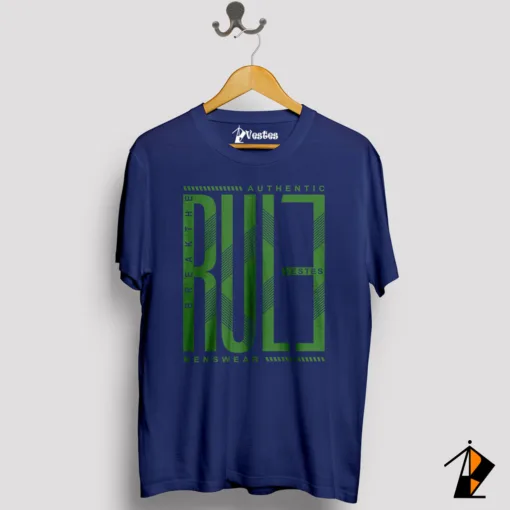
All t-shirts in the Vestes range are made from 100% premium cotton at the correct GSM weight for Pakistani conditions. The fabric is specifically chosen for its performance across Pakistan’s climate — breathable in summer heat, comfortable in cooler months, and durable under Pakistan’s typical washing conditions. The printing process used on Vestes graphic t-shirts is built for the cotton substrate — producing prints that stay sharp through repeated cold-water washing cycles. The full range is available with Cash on Delivery at vestes.com.pk.
Shop 100% Cotton T-Shirts in Pakistan at Vestes 🧵
Every t-shirt at Vestes is made from 100% premium cotton at the right GSM for Pakistan’s climate. Exclusive in-house graphic designs, COD to every city in Pakistan, free shipping above Rs. 3,000. No advance payment required.